Who can buy in Monaco
There are no restrictions on foreign ownership. You do not need to be a resident, hold a permit or obtain prior authorisation to buy an apartment or a villa in the Principality. Purchases can be made in your own name, through a Monegasque civil company (SCI) or through a foreign entity, although the registration duty differs depending on the structure.
The only part of the market that is effectively closed to international buyers is the public and protected housing reserved for Monegasque nationals, which is explained in our guide to Monaco’s housing sectors.
The market you are entering
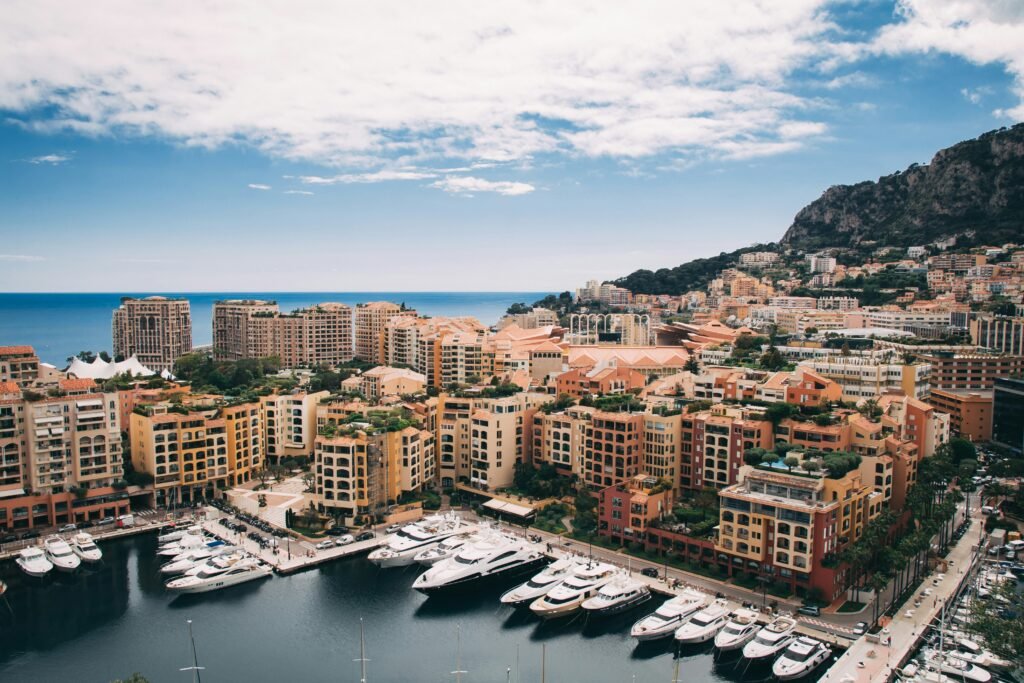
Monaco is small: about 1,470 buildings and two million square metres of housing for roughly 39,000 residents. Supply is the constraint, which is why prices are the highest in the world and why the right building matters more than almost anything else. According to the IMSEE Real Estate Observatory for 2025, the market recorded 493 transactions worth €5.9 billion, the average resale price reached €7.6 million and the estimated price per square metre stood at €57,569, exceeding €70,000 in Larvotto. New buildings delivered in 2024 and 2025 (Mareterra, Bay House) pushed averages up, and only around 100 private dwellings are delivered in a typical year.
Step by step
1. Define the brief and the budget
Before any viewing, settle the non-negotiables: district, number of bedrooms, sea view or quiet, parking, concierge, outdoor space. In Monaco, the building decides the quality of daily life, so we usually start from a shortlist of residences rather than from current listings. If you intend to apply for residency, the purchase can serve as your proof of accommodation.
2. Viewings and off-market access
A meaningful share of Monaco transactions never appear on portals. Owners prefer discretion and agents circulate opportunities within trusted networks. Working with one agency on a clear brief gives you access to these files without multiplying contacts.
3. Offer and acceptance
Offers are made in writing, usually with proof of funds or a bank reference. Negotiation is normally short. Once the price is accepted, the file goes to a notary.
4. Preliminary agreement and deposit
The notary draws up a preliminary sale agreement (compromis de vente). At signing, the buyer pays a deposit of 10% of the price into the notary’s escrow account. If the buyer withdraws without a valid suspensive condition, the deposit is forfeited; if the seller withdraws, the seller owes the same amount. Suspensive conditions, such as financing, are negotiated at this stage.
5. Due diligence
Between the preliminary agreement and completion, the notary verifies title, mortgages, easements and the co-ownership documents. We check the points the paperwork does not show: planned works and their financing, the state of the common areas, the building’s rules on rentals and the quality of the management.
6. Completion
The final deed is signed at the notary, typically two to three months after the preliminary agreement, sooner if there is no financing. Funds are transferred through the notary, the deed is registered and the keys are handed over the same day.
What it costs
Buyers should budget the following on top of the agreed price. Figures are those applied by Monegasque notaries and the Chambre Immobilière Monégasque at the time of writing; the notary will confirm the exact amount for your file.
- Registration duty: 4.75% for a purchase by an individual or by a transparent Monegasque civil company (SCI). Purchases through foreign or non-transparent companies attract a higher rate, generally cited at 7.5% to 10%, so the structure should be decided with your advisers before the offer.
- Notary fees: about 1.5% of the price, plus modest file costs.
- New-build and off-plan purchases: VAT is included in the developer’s price and registration is reduced to about 1%, so total costs are around 2.5%.
- Agency commission: 3% of the price plus 20% VAT (3.6% all in), customarily paid by the buyer. The seller pays a separate commission to the selling agent.
- Financing costs: Monaco banks lend to international buyers, commonly up to 60–70% of value with assets under management as part of the relationship. Mortgage registration adds a small percentage.
Once you own, running costs are limited to building charges (syndic), insurance and utilities. Monaco has no annual property tax, no wealth tax and no capital gains tax on resale for private individuals. Inheritance tax applies only to Monaco assets and is zero between spouses and in the direct line.
Points to check before you sign
- The building’s regime. Apartments in buildings completed before 1 September 1947 may fall under Law 1.235 or Law 887, which restrict who can rent them. This affects rental potential and value.
- Charges and works. Ask for the last three general assembly minutes and the budget. Façade, lift and pool renovations in Monaco run into millions and are shared between owners.
- Parking and cellar. Both are scarce and are usually separate lots. Confirm that they are included in the price and in the deed.
- Surface area. Monaco quotes habitable and total surfaces (terraces, loggias). Compare like with like when assessing price per square metre.
- Rental rules. Some co-ownership regulations prohibit short-term or furnished lettings. If you plan to rent, read them first.
Timeline at a glance
- Week 0–4: brief, shortlist of buildings, viewings.
- Week 4–6: offer, acceptance, choice of notary.
- Week 6–8: preliminary agreement, 10% deposit.
- Week 8–18: due diligence, financing, completion.
Cash purchases without conditions can complete within a few weeks of the preliminary agreement. This article is general information, not legal or tax advice; always confirm figures with a Monegasque notary and your own advisers.
Frequently asked questions
Can a foreigner buy property in Monaco?
Yes. There are no nationality or residency requirements and no prior authorisation to buy an apartment or villa in Monaco. Only public and protected housing reserved for Monegasque nationals is closed to international buyers.
How much are the purchase costs in Monaco?
For a resale bought by an individual, budget about 6.25% of the price: 4.75% registration duty and roughly 1.5% notary fees. Add the buyer's agency commission of 3% plus VAT. New-build purchases carry lower registration costs of around 2.5% in total.
How long does it take to buy in Monaco?
Typically two to three months between the preliminary agreement and completion, and less for a cash purchase without conditions. Finding the right apartment usually takes longer than the transaction itself.
Is there a property tax or capital gains tax in Monaco?
No. Monaco has no annual property tax, no wealth tax and no capital gains tax on the resale of real estate by private individuals. Owners who are tax resident elsewhere should check their home-country rules.
Can I get a mortgage in Monaco as a non-resident?
Yes. Monaco private banks finance international buyers, commonly up to 60–70% of the value, often as part of a wider banking relationship. A financing condition can be included in the preliminary agreement.
General information, not legal, tax or immigration advice. Figures reflect market practice at the review date.
Sources
- IMSEE – Real Estate Observatory 2025 (Feb 2026) (consulted 15 November 2026)
- Petrini – Purchase costs in Monaco (consulted 15 November 2026)
- Savills – Monaco market reports 2025 (consulted 15 November 2026)